Looking to elevate your closet game? You’re not alone. Many of us are craving organization and style in our storage spaces. A clean and functional closet isn’t just about tidiness; it’s about creating a space that feels good and works for you. You want a closet that reflects your style while maximizing your storage. This post is here to help you achieve just that.
If you’re someone who loves home decor and minimalism, then this guide is perfect for you. You’re on a quest for closet design ideas that are practical and stylish. You want solutions that will simplify your life while adding a touch of elegance to your home. From clever organization techniques to chic design elements, we’ve got you covered.
In this post, you’ll discover 14 unique closet design ideas that balance aesthetics and functionality. Each idea is crafted to help you make the most out of your space, whether you have a small closet or a large walk-in. You’ll find tips on everything from open shelving to concealed storage, ensuring your closet not only looks great but also serves you well. Get ready to transform your closet into a space you’ll love.
Key Takeaways
– Embrace Open Shelving: Open shelves allow for easy access and can make your closet feel more spacious. Use them to display folded clothes or accessories for a stylish touch.
– Opt for Modular Storage Solutions: Consider using modular units that you can rearrange as your needs change. They are versatile and can adapt to any closet size.
– Prioritize a Minimalist Color Palette: Stick to neutral or cohesive colors to create a calming environment. A minimalist palette helps enhance the visual appeal of your closet.
– Incorporate Vertical Storage Techniques: Utilize vertical space by adding hooks or tall shelving. This helps maximize closet space and keeps everything organized.
– Use Labels for Efficient Organization: Clearly labeled bins and shelves make it easy to find what you need quickly. This simple tip can save you time and stress when getting dressed.
1. Open Shelving for Easy Access
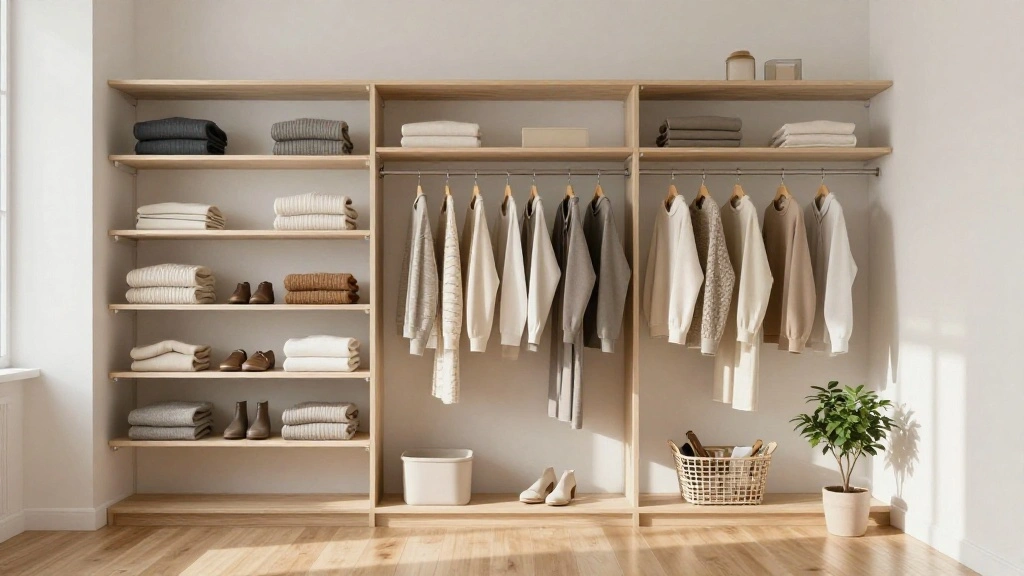
Embracing open shelving in your closet design can transform the space into a stylish and functional area. This approach fosters visual transparency, allowing you to easily see and access your belongings. It works particularly well in minimalist settings where each item can shine. Arrange similar items together and use decorative boxes for smaller accessories like scarves and jewelry to keep everything looking neat and tidy. The trick is to maintain organization while showcasing your favorite pieces!
Consider these ideas to make the most of open shelving:
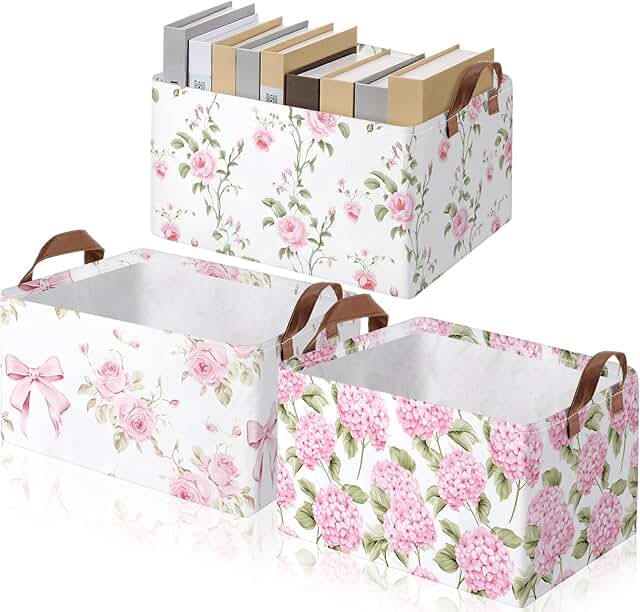
– Pair open shelves with baskets for a chic look
– Install shelves at varying heights for visual interest
– Use hooks on the sides for easy access to bags and hats
This design enhances the overall aesthetic while allowing textures like woven baskets to add depth and character to your closet.
Fun fact: Open shelving is a staple in closet room ideas and can boost perceived space by up to 20% in a small closet. Keep outfits organized by color or category so you can grab your look in seconds.
Open Shelving for Easy Access
Editor’s Choice




2. Modular Storage Solutions
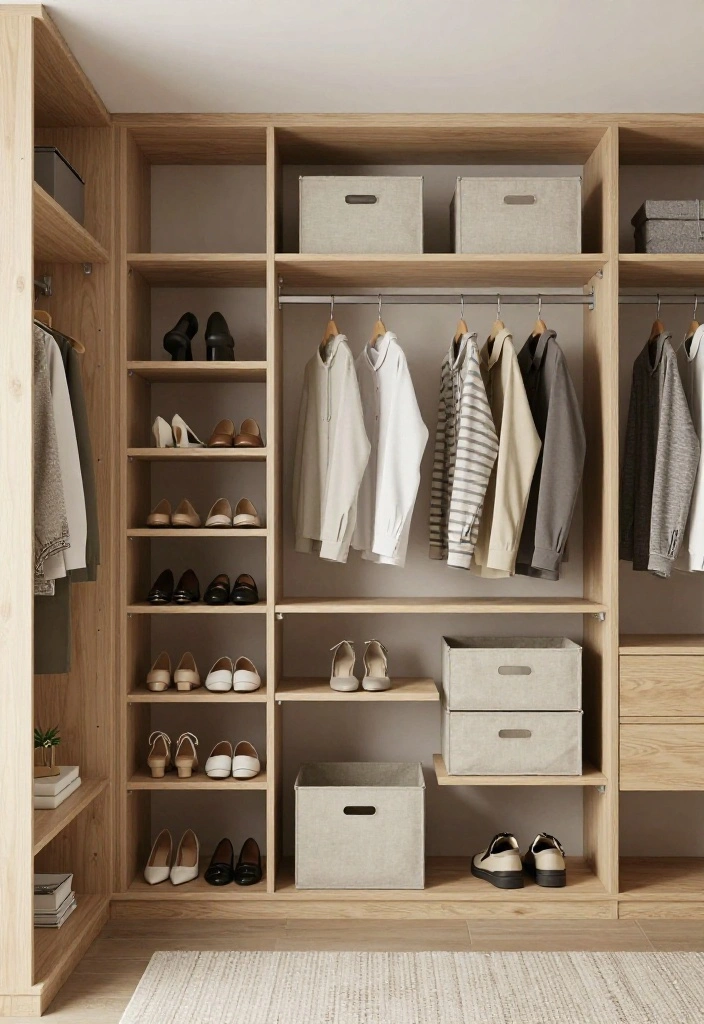
Modular storage solutions offer a fantastic way to create a closet that meets your unique needs and style. By mixing and matching components like drawers and shelves, you can customize the layout to perfectly accommodate your wardrobe. Whether you have a vast shoe collection or an array of accessories, these systems keep everything organized and within reach. This flexibility is key for an efficient and pleasant closet experience.
To maximize your modular setup, try these tips:
– Start with a base unit and expand as needed
– Consider vertical storage to utilize all available space
– Incorporate pull-out baskets for easy access to frequently used items
This approach not only enhances usability but also allows you to showcase your favorite pieces beautifully, contributing to a well-organized and visually appealing space.
Modular Storage Solutions
Editor’s Choice



3. Minimalist Color Palette
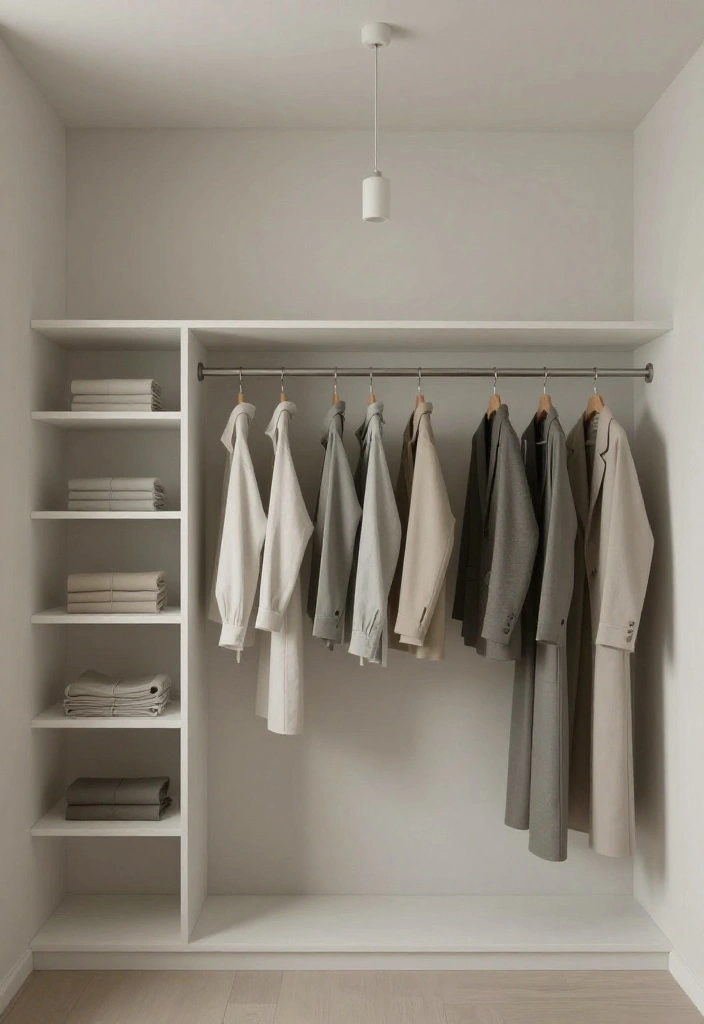
A minimalist color palette can elevate your closet’s aesthetic, creating a serene and spacious atmosphere. Selecting neutral tones like whites, soft grays, and beiges allows for easy outfit coordination while maintaining a calm environment. This approach emphasizes the beauty of your clothing, making them the central focus within the closet. A monochromatic scheme also helps in creating a visually cohesive space.
For a successful minimalist palette, consider these strategies:
– Stick to a limited color scheme for a unified look
– Introduce pops of color through accessories for interest
– Use soft lighting to enhance the overall atmosphere
This design choice not only simplifies your visual experience but also invites you to interact with your space, making it feel more like a curated boutique.
4. Vertical Storage Techniques
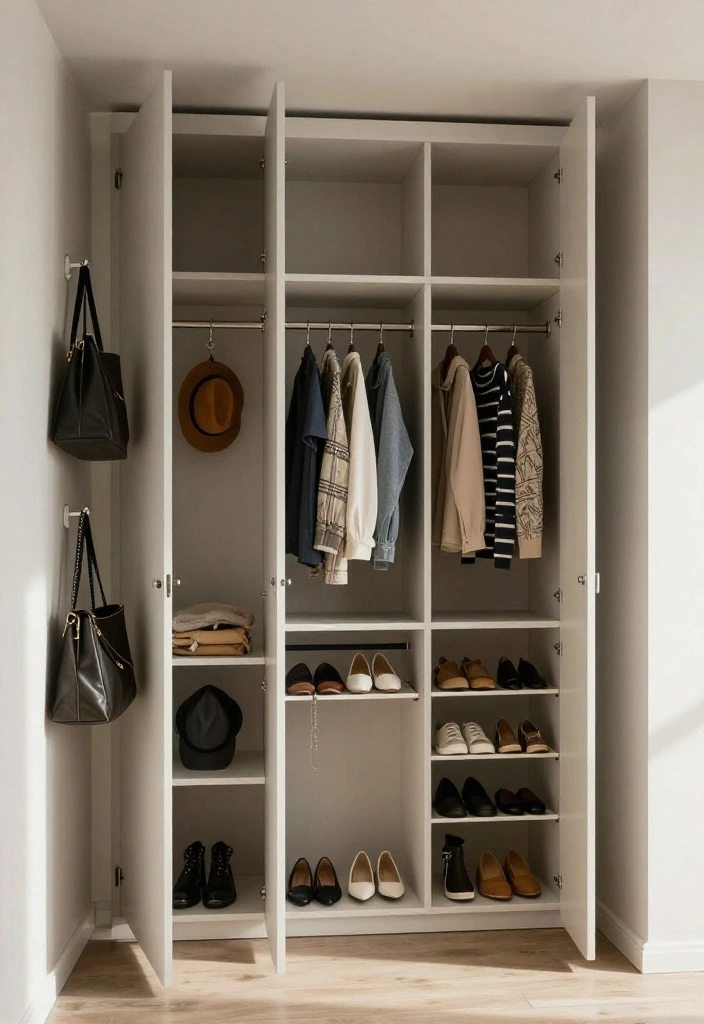
Maximizing vertical storage in your closet is crucial, especially when space is at a premium. Think creatively by adding hanging solutions, pegboards, or hooks for bags and accessories. This method keeps the floor clear while allowing for stylish displays of your favorite items. Utilizing vertical space efficiently can transform the way you interact with your closet.
Here are some tips to enhance vertical storage:
– Use hooks for hats, bags, and belts
– Install shelves at varying heights for different item types
– Consider tiered racks for easy access to shoes
This approach not only optimizes your storage capacity but also adds visual interest, making your closet both functional and attractive.
5. Concealed Storage for a Sleek Look
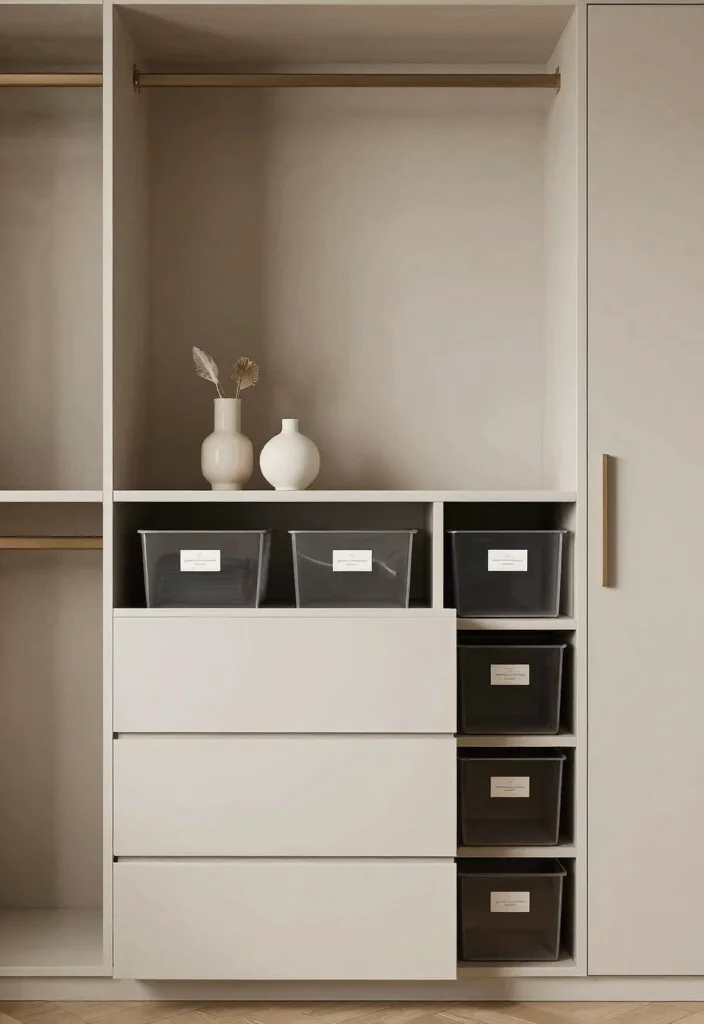
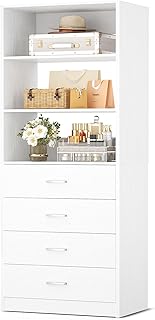
In a minimalist closet, concealed storage is essential for maintaining a clean and tidy appearance. By incorporating drawers and cabinets, you can neatly store less frequently used items like seasonal clothing or extra linens. This design keeps your closet looking organized, allowing your favorite pieces to take center stage. Opt for sleek, modern cabinetry for a sophisticated touch.
To make the most of concealed storage, consider these ideas:
– Match cabinetry to your closet’s color scheme for a cohesive look
– Use clear bins inside drawers for easy visibility
– Incorporate soft-close mechanisms for a touch of luxury
This design choice enhances the overall serenity of your closet, ensuring that every item feels thoughtfully placed and easily accessible.
Fun fact: 60% of closet clutter disappears when you hide seasonal items in concealed drawers. As part of closet design ideas, sleek cabinetry stores rarely used pieces, keeping your everyday outfits front and center.
6. Incorporating Mirrors
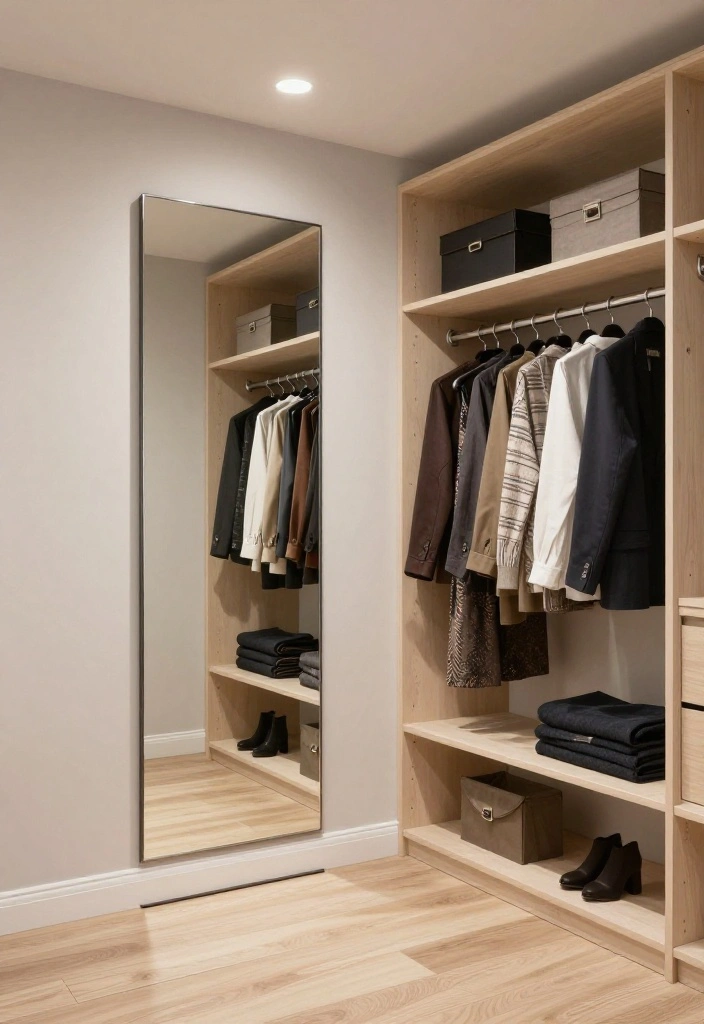
Mirrors serve a dual purpose in your closet; they help you check your outfits while also making the space feel larger and brighter. A strategically placed full-length mirror can create depth and reflect light, enhancing the overall ambiance. Integrating mirrored surfaces adds a touch of glam while remaining practical.
To effectively use mirrors in your closet, try these suggestions:
– Position mirrors across from light sources for maximum brightness
– Use mirrored decor to keep the space feeling open
– Consider a mirrored cabinet for both storage and elegance
This not only improves functionality but also transforms your closet into a stylish retreat where you can enjoy selecting your outfits.
7. Customized Hanging Solutions
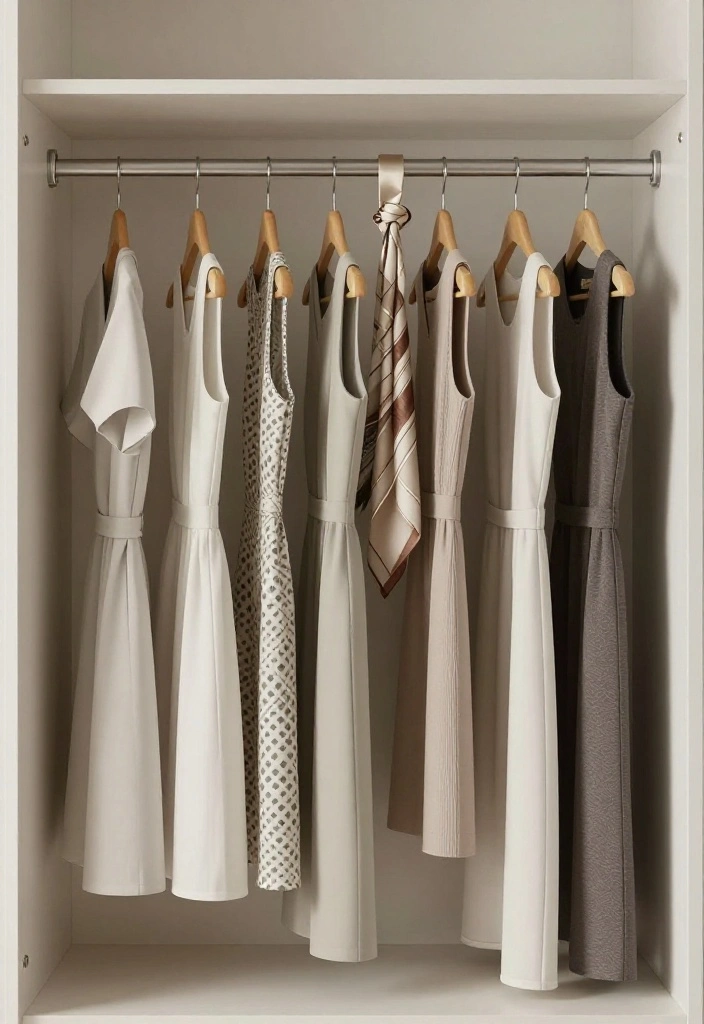
Customizing your hanging solutions is vital for a well-organized closet. Instead of standard rods, opt for adjustable systems that cater to your wardrobe’s needs. Incorporate double rods for shorter clothing and single long rods for dresses to maximize space and usability.
For efficient hanging, consider these tips:
– Use cascading hangers to save vertical space
– Add a pull-down rod for easy access to high shelves
– Incorporate specialty hangers for belts and ties
This personalized approach not only improves organization but also enhances the overall functionality of your closet, making it easier to maintain.
8. Built-In Lighting
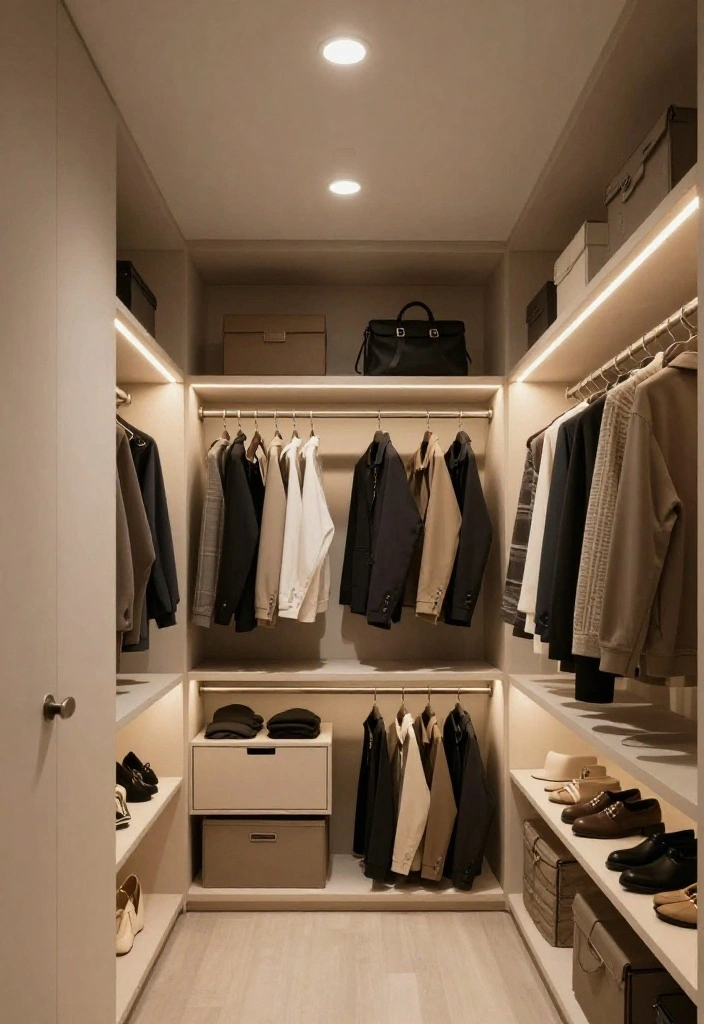
Incorporating built-in lighting is essential for any modern closet design. Proper illumination not only enhances visibility but also adds a luxurious feel to the space. LED strip lights and recessed fixtures can provide focused lighting that eliminates shadows, making outfit selection a breeze.
To optimize your closet lighting, consider these ideas:
– Install motion sensors for automatic light activation
– Choose warm white bulbs for a cozy atmosphere
– Use accent lighting on shelves to highlight special pieces
This thoughtful lighting design elevates the aesthetic of your closet, creating an inviting space that enhances your daily routine.
9. Multi-Functional Furniture
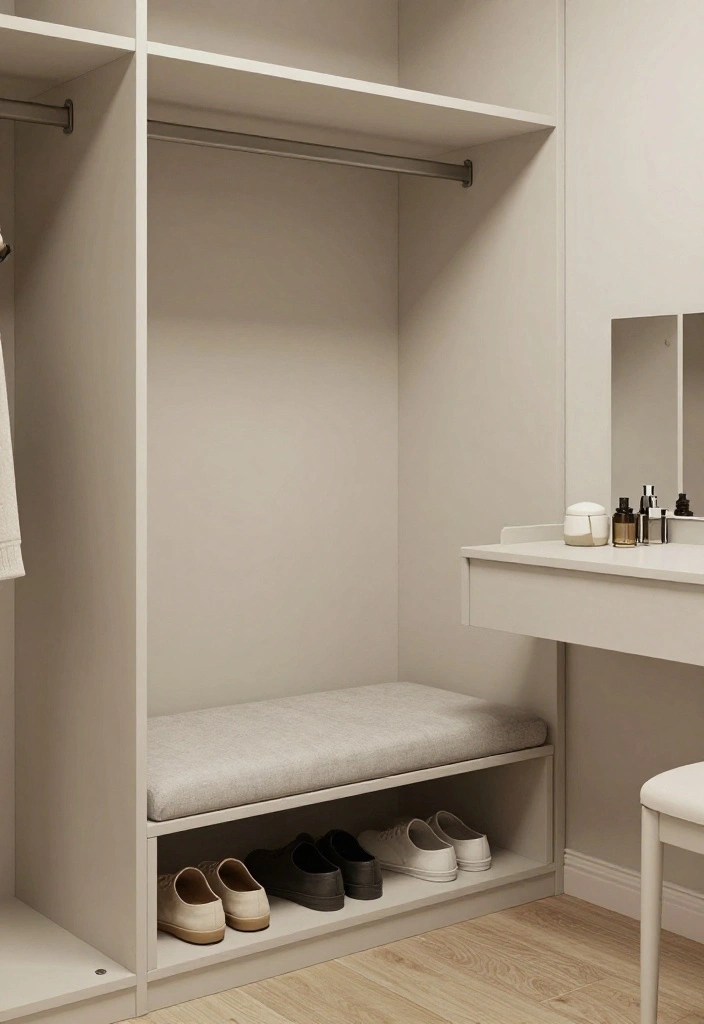
Integrating multi-functional furniture into your closet can significantly boost its usability. Consider a bench that doubles as a shoe storage unit or an ottoman that holds accessories while providing seating. This not only saves space but also enhances the overall design.
To choose the right multi-functional pieces, keep these tips in mind:
– Select neutral designs to maintain a cohesive aesthetic
– Ensure that the furniture is both sturdy and stylish
– Look for pieces that blend seamlessly into your existing decor
This approach not only maximizes space but also adds a sophisticated touch to your closet, making it both functional and fashionable.
Dimensions & Size Guide
Standard Sizes & Measurements:
Understanding standard sizes is key to creating a functional closet layout. Common closet dimensions vary based on the type of closet. A reach-in closet typically measures around 5 to 8 feet wide and can be 2 to 3 feet deep. Walk-in closets are generally larger, with dimensions ranging from 6 by 8 feet to 10 by 12 feet or more.
For proper fit, consider these minimum requirements: a reach-in closet should have at least 24 inches of depth for hangers to fit properly. In a walk-in closet, ensure you have at least 36 inches of walkway space to allow easy access. Always account for the swing of closet doors; they require a clearance of at least 30 inches from the door frame.
Space planning is crucial. Take precise measurements of your clothing and storage items. For example, if you’re using shelves or drawers, know the height and width of each piece to avoid cramped conditions.
Quick Reference Table:
Size/Dimension – Best for: [use case], Minimum space needed: [measurement]
– Reach-in Closet (5-8 ft wide, 2-3 ft deep) – Best for: Efficient use of small spaces, Minimum space needed: 24 inches for hanging clothes.
– Walk-in Closet (6-10 ft wide, 8-12 ft deep) – Best for: Storing larger wardrobes and accessories, Minimum space needed: 36 inches for access.
– Shelves (12-16 inches deep) – Best for: Storing shoes and accessories, Minimum space needed: 12 inches for shelf depth.
– Hanging Rod (36-60 inches wide) – Best for: Hanging clothes, Minimum height: 66 inches from the floor for long garments.
Space Planning Tips:
1. Measure Twice, Cut Once: Always double-check your measurements before purchasing materials or furniture. A common mistake is miscalculating the height or width, leading to wasted resources and time. ✔
2. Leave Room for Movement: When designing your closet layout, factor in space for easy movement. Avoid overcrowding by keeping pathways at least 36 inches wide. This ensures you can reach everything comfortably. 🚀
3. Think About Your Items: Consider the types of items you will store. For longer dresses or coats, ensure you have adequate hanging space of at least 66 inches in height. For shoes, plan for shelves that are about 12 inches deep. 💡
4. Use Vertical Space: Maximize your storage by utilizing vertical space. Install shelves or hooks above eye level. Just make sure you can comfortably reach them! A common error is neglecting upper shelf access, making them unusable. ⏱
5. Adjust for Seasonal Changes: If you rotate your wardrobe seasonally, plan for storage solutions that accommodate this. Ensure you have enough space for clothing swaps without cluttering your closet.
Pro Tip: The most important measurement is the width of your hanging rod. Aim for at least 36 inches to avoid overcrowding. This will keep your clothes wrinkle-free and easily accessible, helping you maintain an organized closet.
10. Seasonal Rotation Systems
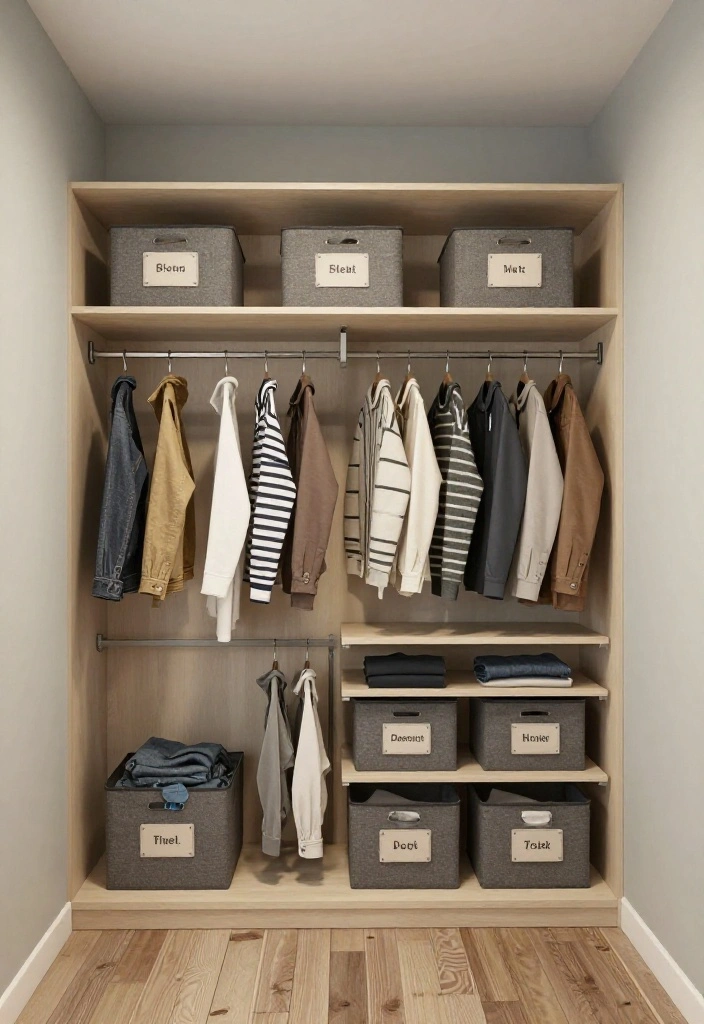
Implementing a seasonal rotation system can keep your closet organized and relevant year-round. By storing off-season clothing in bins or designated areas, you can create space for items you wear more often. This practice not only improves organization but also allows for easy access to your current wardrobe.
To effectively manage seasonal rotation, consider these strategies:
– Clearly label bins for easy identification
– Store bins in accessible locations
– Review your closet at the end of each season for decluttering
This system enhances organization, making transitions between seasons smoother while keeping your closet tidy and manageable.
11. Labels for Efficient Organization
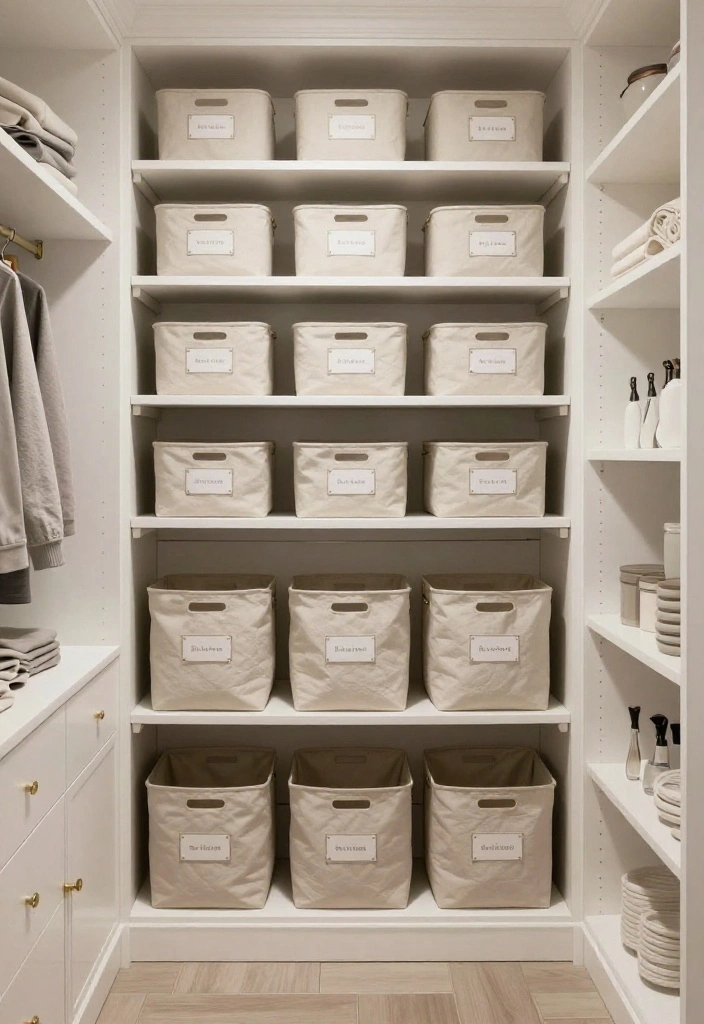
Labels may seem like a small detail, but they can have a big impact on your closet organization. Whether you’re using bins, baskets, or shelves, labeling helps maintain order and allows for quick access to items. Choose simple, elegant labels that complement your closet’s aesthetic for a cohesive look.
To maximize the effectiveness of labeling, try these tips:
– Maintain a consistent labeling system throughout
– Select fonts and styles that align with your design
– Use a label maker for uniformity or handwrite for a personal touch
This thoughtful detail enhances organization and ensures you can easily find what you need without unnecessary searching.
12. Utilizing Nooks and Corners
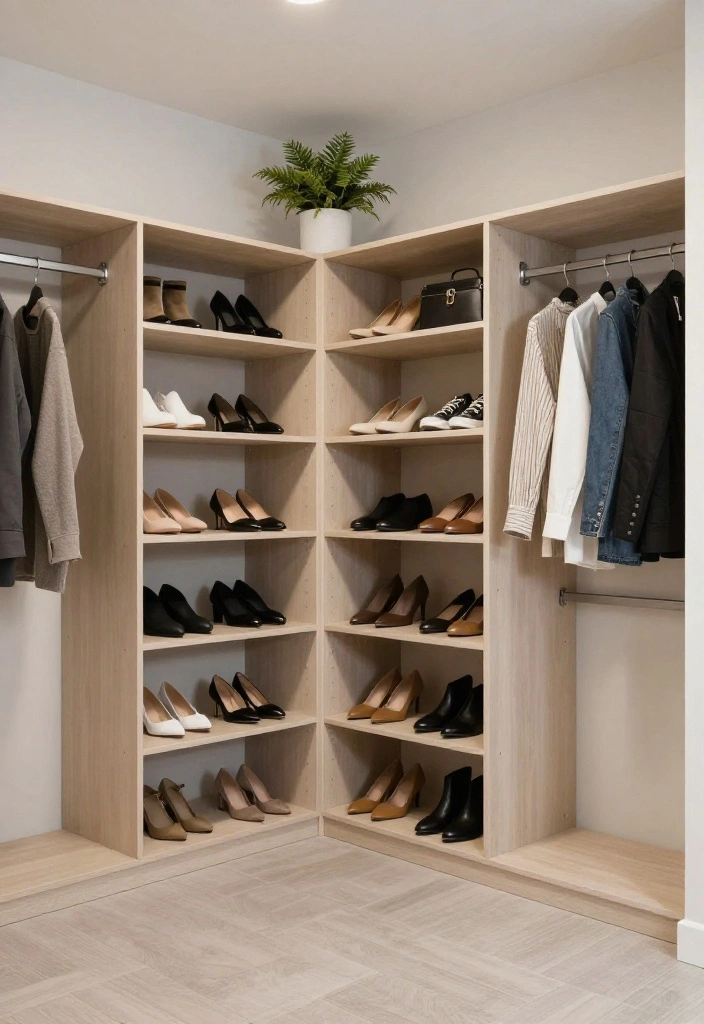
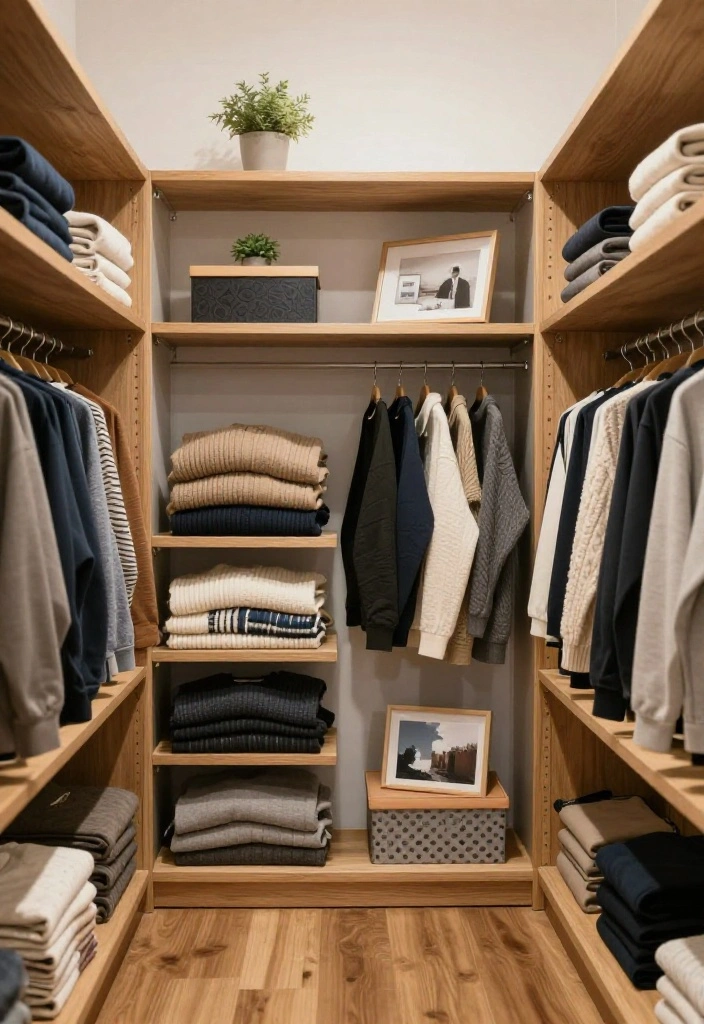
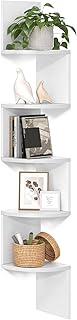
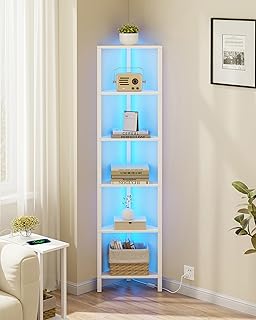
Don’t overlook the potential of nooks and corners in your closet! These often-neglected spaces can be transformed into clever storage solutions. Installing corner shelves or rotating racks can maximize every inch, making your closet more efficient.
To utilize nooks effectively, consider these suggestions:
– Use tiered racks for easy access to shoes
– Keep frequently used items at eye level for convenience
– Add decorative pieces or plants for added style
This creative approach enhances organization and makes your closet visually appealing, ensuring no space goes to waste.
Utilizing Nooks and Corners
Editor’s Choice


13. Color-Coded Organization
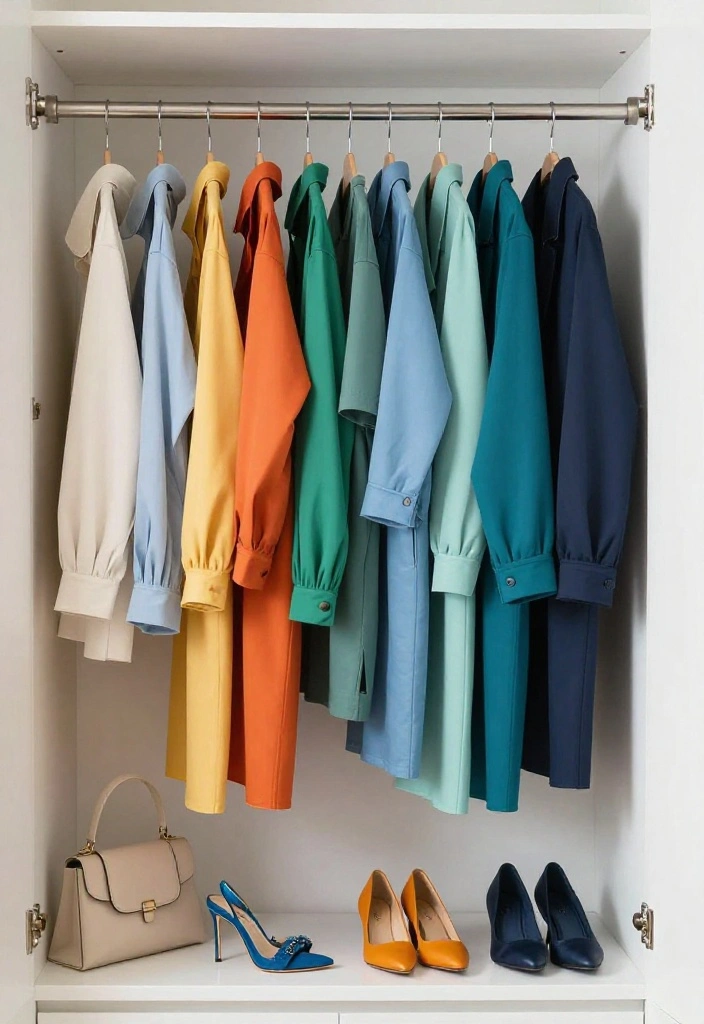
Color-coding your closet not only pleases the eye but simplifies the outfit selection process. Grouping clothing by color creates a harmonious display and makes it easy to find what you want. This system can also extend to accessories, leading to a vibrant and organized closet.
To implement color-coding effectively, follow these tips:
– Organize from light to dark shades for a gradual transition
– Maintain consistency when adding new pieces
– Consider a seasonal color palette for freshness
This approach enhances visual appeal and keeps your closet dynamic, making it a joy to use.
Fun fact: color-coded closets can cut outfit-search time by up to 50%. Organize from light to dark for a calm, harmonious flow. These closet design ideas keep your space consistently organized.
Color-Coded Organization
Editor’s Choice



14. Smart Accessories Storage
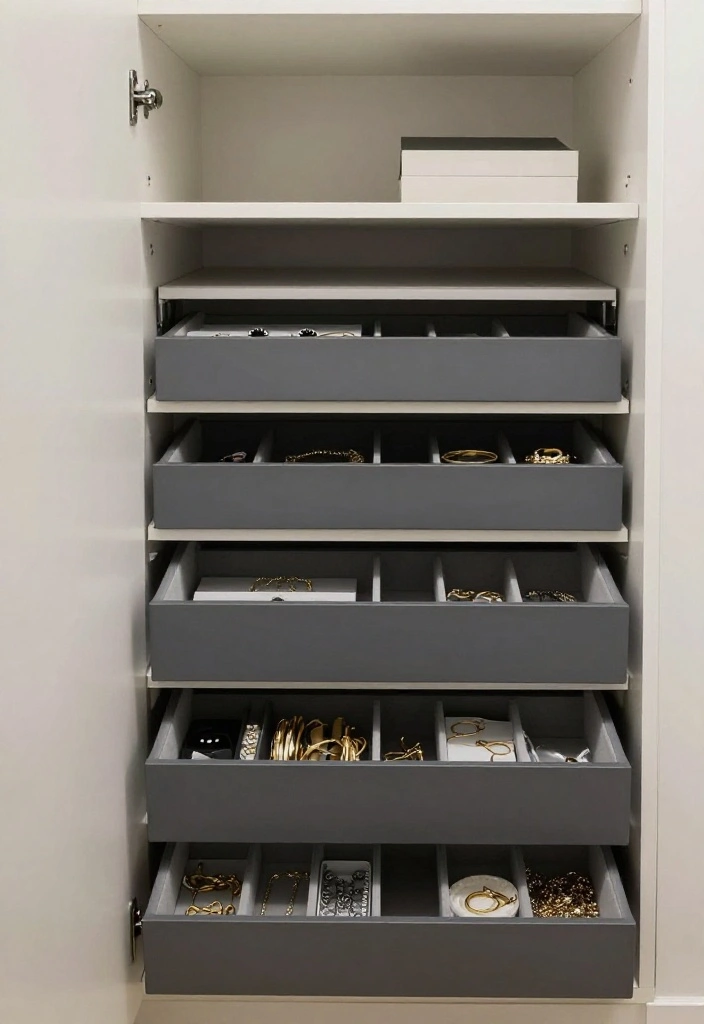
Finally, smart accessories storage is vital for a minimalist closet. Use drawer dividers or dedicated trays for items like jewelry, ties, and belts to keep them organized and untangled. This not only protects your belongings but also allows for quick visibility.
For effective accessories storage, consider these ideas:
– Incorporate small trays for loose items
– Use clear organizers for easy access
– Regularly declutter to keep only what you use
This thoughtful organization method ensures that your accessories are always within reach while enhancing the overall aesthetic of your closet.
Smart Accessories Storage
Editor’s Choice


Conclusion
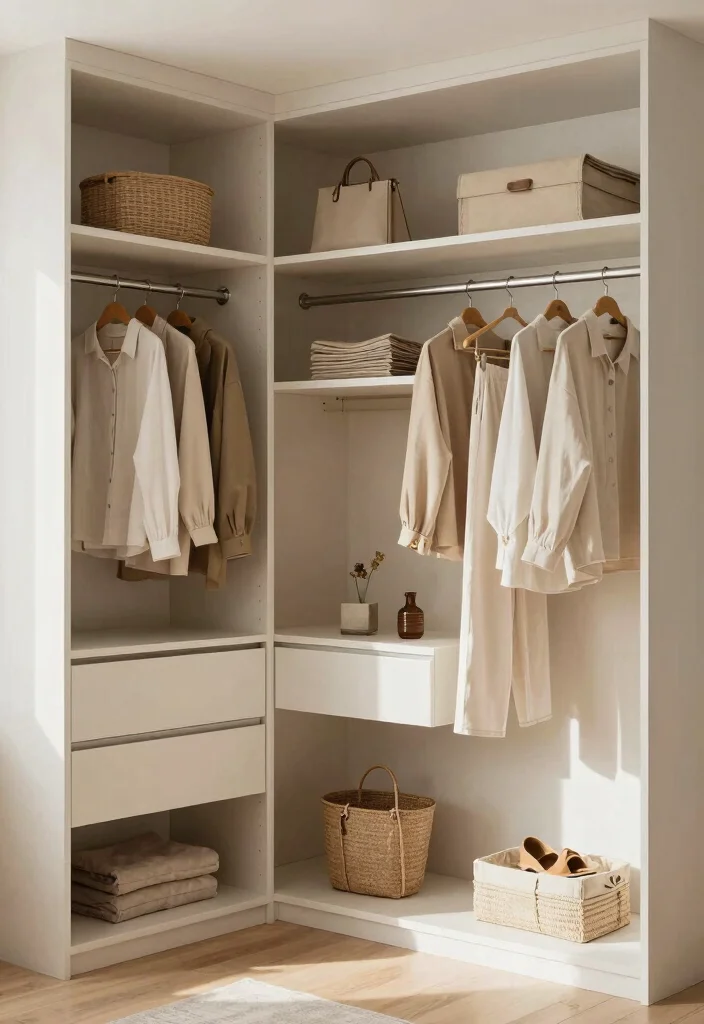
Designing a clean and functional closet is all about making the most of your space while reflecting your personal style. By incorporating these closet design ideas, you can create a space that not only looks good but also works efficiently for your lifestyle. From open shelving to smart storage solutions, every choice counts in achieving that minimalist dream. Embrace the process and enjoy your newly organized sanctuary!
Note: We aim to provide accurate product links, but some may occasionally expire or become unavailable. If this happens, please search directly on Amazon for the product or a suitable alternative.
This post contains Amazon affiliate links, meaning we may earn a small commission if you purchase through our links, at no extra cost to you.
Frequently Asked Questions
What are essential closet design ideas for a clean and functional layout?
Kick off with a clear plan for your closet design ideas. For a functional closet layout, designate zones for hanging, folding, and storage, and keep the most-worn pieces within easy reach. Use space-saving storage solutions like adjustable shelves, a second hanging rod, and shallow drawers to maximize every inch. Choose a calm color palette and stylish closet designs with simple hardware to keep the space feeling open.
Practical steps: measure your space, sketch a basic layout, install modular components you can reconfigure, and add door organizers to reclaim wall space.
Pro tip: stick to a capsule approach with uniform hangers and labeled bins to reinforce solid closet organization tips.
How can I maximize closet space without major renovations?
You can maximize closet space with smart, reversible changes. Focus on space-saving storage solutions like double hanging rails, adjustable shelves, pull-out baskets, and slim profile drawers. Add over-the-door organizers and under-shelf baskets to use dead space. Pick a modular system you can scale later while keeping stylish closet designs intact.
Step-by-step: purge and categorize, measure, install adjustable components, and label containers for easy closet organization tips.
What are space-saving storage solutions for small bedrooms?
In small bedrooms, every inch counts. Try space-saving storage solutions such as over-the-door organizers, slim shoe racks, vertical organizers, and under-bed storage. Choose a compact closet system that balances hanging space with drawers to aid maximizing closet space. Keep the look cohesive with a light color and closet design ideas that translate to the rest of the room.
Action items: install a double-hanging rail where possible, add a slim pull-out for accessories, and rotate seasonal items to free up space.
How do I create a minimalist closet that still feels stylish?
Create a calm, intentional space with minimalist closet design ideas. Start with a neutral base, a capsule wardrobe, and stylish closet designs that emphasize clean lines and hidden storage. Use uniform hangers, hidden drawers, and a simple lighting plan to keep surfaces clear. Add one or two functional pieces like a shallow pull-out for small items and a bench that doubles as storage.
Practical steps: prune aggressively, limit color families to three, and store out-of-season pieces out of sight to maintain a tidy look.
What should I consider when planning a functional closet layout for different clothing types?
Plan by zones: shirts and tops at eye level, dresses and coats on tall rods, pants on a lower hanging bar, shoes in a dedicated rack, and accessories in small drawers or baskets. A functional closet layout should balance space-saving storage solutions with enough room to breathe. Use adjustable shelves, pull-out baskets, and vertical organizers to maximizing closet space. Keep a cohesive style to achieve stylish closet designs even in a busy setup.
Action steps: map item footprints, measure proportions, choose modular components, and test the flow for ease of daily use.